heet metal is one of the most hazardous materials in a fabrication shop. It's heavy, it has sharp edges on every side, and when it falls or shifts unexpectedly, the results are serious. Most shops know this. What fewer shops recognize is that the storage method itself is where many of those hazards originate.
Vertical sheet metal storage racks don't just save floor space. They fundamentally change the handling conditions that cause injuries. Here's why the geometry of how you store sheet metal matters as much as any PPE policy or safety training program.
Floor-stacked pallets and horizontal rack storage share a common hazard structure. Understanding it explains why vertical storage changes the risk profile so significantly.
When sheets are stacked flat, operators reaching into the stack to find a specific gauge are reaching toward unseen edges. They can feel the material but can't always see where the edge is relative to their hands. In a shop running a mix of gauges on the same pallet, this happens dozens of times per shift. Laceration injuries from sheet metal edges are among the most common recordable incidents in fabrication environments.
Flat stacks are inherently unstable when accessed from the side. Pulling one sheet from partway down a pile can cause the sheets above it to shift, slide, or drop. A single 4x8 sheet of 10-gauge steel weighs over 100 lbs. At head or shoulder height, that's a struck-by incident waiting to happen.
Extracting a sheet from a horizontal stack typically requires lifting one edge to slide it out from under adjacent material, then maneuvering it to a vertical orientation for transport. That lift involves a bent-over posture under load, often with a rotational component. Musculoskeletal disorders are the leading category of workplace injury in manufacturing, and awkward material handling is the primary cause.
Floor-stacked storage requires forklift repositioning to access buried material. Every forklift movement in a congested storage area near foot traffic is a pedestrian hazard event. The Shuffle isn't just a productivity problem; it's a safety problem measured in powered industrial truck incidents.
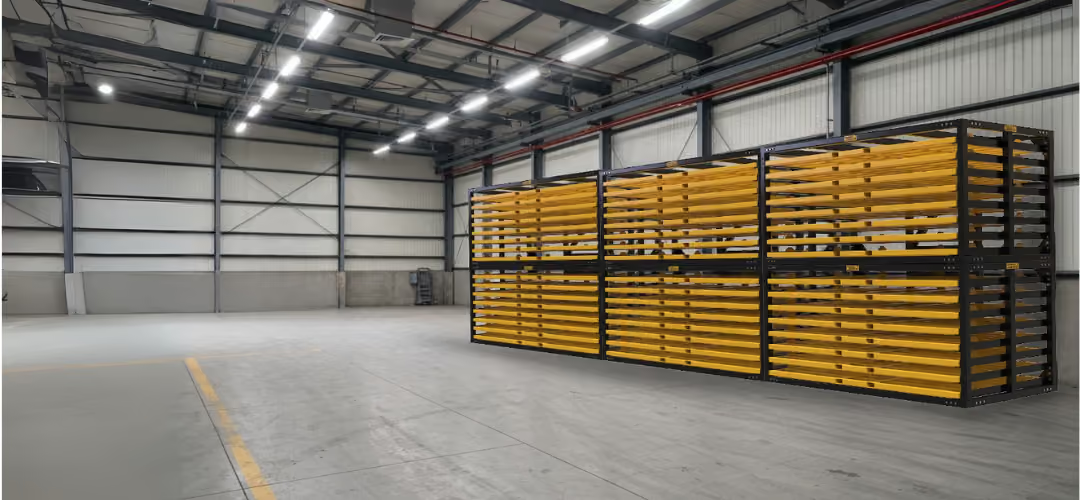
A vertical sheet metal rack stores sheets upright, standing on edge in individual bays. That single change in orientation restructures every hazard listed above.
In a vertical bay, sheets stand with their face presented to the operator. Access is from the top using an overhead crane or vacuum lifter, not from the side by hand. The exposed edges that cause lacerations in horizontal stacks are now at the sides of the bay, away from the retrieval path. The operator never reaches toward an unseen edge.
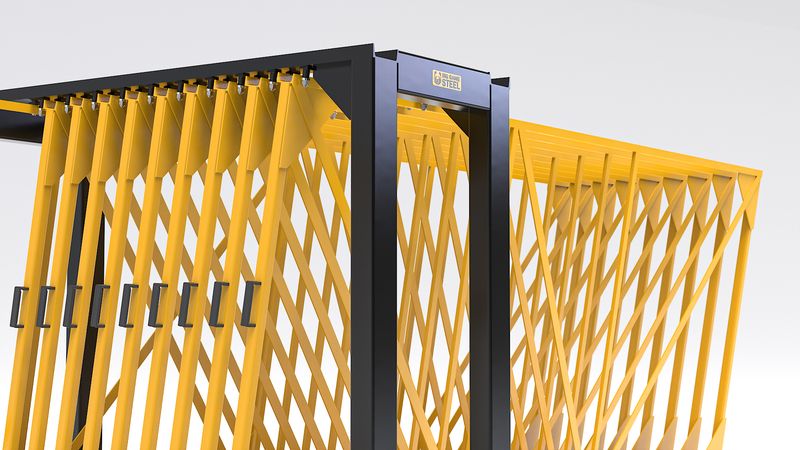
Each bay in a vertical rack holds one sheet or one gauge group, isolated from adjacent bays by the rack structure itself. Removing one sheet from its bay doesn't destabilize anything nearby. There's no pile to shift, no adjacent material to slide. The rack structure provides the containment that flat stacks lack entirely.
Vertical storage is designed for overhead equipment, not manual extraction. A vacuum lifter attaches to the sheet face, lifts it cleanly from the bay, and transfers it to the machine. The operator's hands are on the lifter controls, not on the sheet edge. This is the single most significant ergonomic improvement vertical storage provides: it removes the manual handling event entirely.
Vertical racks occupy a fraction of the floor space of horizontal storage for the same volume of material. That reclaimed floor space restores aisle widths, reduces forklift travel in pedestrian zones, and eliminates the congested retrieval conditions that generate The Shuffle. Less forklift activity near foot traffic means fewer struck-by exposure events.
The Ridgeline Vertical Sheet Metal Rack is built specifically for shops running overhead cranes or vacuum lifters. Sheets store upright at 2,000 lb per bay, in individual bays that isolate each sheet from adjacent material. The compact footprint positions the rack where it does the most good: tight to the machine it feeds, away from high-traffic aisles.
For shops running precision laser cutting, the safety benefits compound with material quality benefits. Sheets that arrive at the cutting table free of handling damage are Laser-Ready Sheets: flat, clean, and unscratched. The vacuum lifter that makes vertical storage safe is the same tool that eliminates the surface contact damage that floor stacking causes.
Vertical sheet metal storage delivers its safety benefits most fully when certain conditions are in place:
For shops that load primarily by forklift and don't have overhead equipment, a horizontal rack system with organized bays still represents a significant safety improvement over floor stacking. The Standard Sheet Metal Storage Rack and Combo Sheet Metal Storage Rack eliminate floor-stacking instability, reduce forklift repositioning in the storage area, and put material in defined locations that operators can access without blind reaches into mixed piles.
For shops with overhead crane or vacuum lifter equipment, vertical storage eliminates the primary manual handling hazards associated with flat sheet storage: blind reaches toward unseen edges, sheet-over-sheet tip and slide risk, and awkward extraction lifts. It also reduces forklift congestion by freeing floor space. For shops without overhead equipment, a well-organized horizontal rack system delivers meaningful safety improvements over floor stacking.
Vertical storage reduces exposure to lacerations from sheet metal edges during manual retrieval, struck-by injuries from shifting or falling horizontal stacks, musculoskeletal strain from awkward extraction lifts, and forklift-pedestrian incidents caused by congested storage areas. Each hazard maps directly to a structural feature of horizontal floor storage that vertical racks eliminate.
Yes. Vertical racks are designed for overhead crane or vacuum lifter access. Using vertical storage without this equipment would require manually lifting sheets from an upright position, which introduces new ergonomic hazards. Shops without overhead handling equipment should use horizontal racks with organized bays as their primary safety upgrade.
Vertical racks occupy significantly less floor space than horizontal storage for the same material volume. This restores aisle widths, clears egress routes, and eliminates the need to reposition pallets to access buried material. Fewer forklift movements in storage areas near foot traffic means fewer pedestrian exposure events.
The safest storage method depends on your shop's handling equipment. Shops with overhead cranes or vacuum lifters benefit most from vertical storage, which eliminates manual sheet handling entirely. Shops loading by forklift should use a horizontal rack system with defined, labeled bays that prevent floor stacking, eliminate mixed-gauge piles, and organize material so operators always access it from a predictable, controlled position.
The hazards in most fabrication shops aren't random. They're built into the storage method. A vertical sheet metal rack doesn't just reorganize your material; it removes the conditions that put your operators at risk every time they pull a sheet.
Big Game Steel builds heavy-duty vertical and horizontal sheet metal storage racks engineered for production fabrication environments. Contact us or call 847-380-0860 to talk through the safest configuration for your shop.