sk most shop owners where their material damage happens and they'll point at the machine. A bad cut, a misaligned fixture, a press brake setup that was off by a few thousandths. But pull the reject pile and look closer—a significant portion of that damage happened before the sheet ever got to the table.
It happened in storage. And because storage damage is slow, cumulative, and easy to overlook, most shops absorb the cost without ever identifying the source.
Material damage from poor storage shows up in a few distinct ways, each with its own downstream cost:
When sheets are stacked flat in horizontal piles, every retrieval event drags the top sheet across the one below it. Over dozens of pulls, the accumulated micro-scratches on the bottom sheet's surface become a visible defect—one that shows up after cutting, bending, or finishing. For painted, coated, or stainless stock, this is a reject-level problem.
Wooden pallets absorb and release moisture. Sheet metal sitting directly on a wooden pallet—or in contact with wet concrete through a pallet—picks up that moisture on its bottom surface. The result is surface oxidation that doesn't always show up immediately but contaminates weld zones, degrades coating adhesion, and causes inconsistent laser cutting performance.
Every time a forklift repositions a pallet to reach the material underneath—The Shuffle—there's a chance of edge contact, corner dents, or sheets shifting against each other under the load. Thin-gauge material is especially vulnerable. A dented edge on a sheet headed for a press brake means a part that won't blank correctly.
Sheets stored on uneven surfaces, or supported only at their edges rather than across their full width, develop a bow over time. This is especially common with large-format sheets—the 5x10s and 6x12s that span a wider unsupported distance. A warped sheet that won't lie flat against the laser cutting table is scrap before it's ever been cut.
Damaged material doesn't just cost the price of the sheet. It costs:
None of these costs show up in your storage budget. They show up in your scrap rate, your rework hours, and your on-time delivery numbers—which is exactly why the storage connection gets missed.
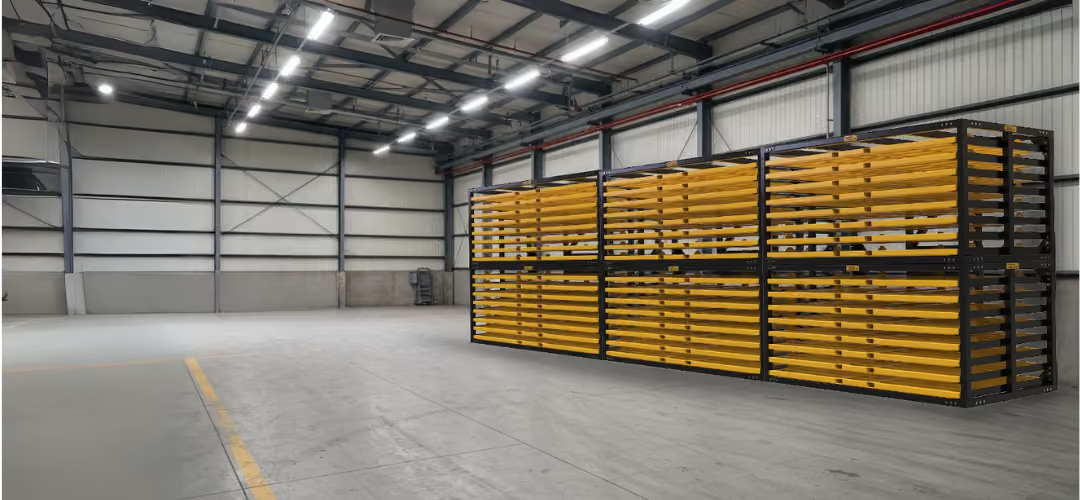
Purpose-built sheet metal storage racks eliminate the conditions that cause storage damage:
Not every shop faces the same damage risk. Here's how to match the right system to your specific exposure:
Prioritize systems that eliminate sheet-on-sheet contact. The Roll-Out Sheet Metal Rack with 100% drawer extension lets you access individual sheets without any contact with adjacent material. The Ridgeline Vertical Sheet Metal Rack stores sheets upright in individual bays—zero surface contact during storage or retrieval.
Any rack system gets material off the floor and away from wooden pallets. The Standard Sheet Metal Storage Rack eliminates direct floor contact entirely. In high-humidity environments, keeping material elevated and away from wood is the single most effective way to control surface oxidation.
When your team is pulling sheets constantly throughout the day, the cumulative contact damage from an unorganized system adds up fast. The Combo Sheet Metal Storage Rack organizes material by type with forklift, crane, and drawer access—so every pull is clean, targeted, and fast. Your Laser-Ready Sheets stay in spec from rack to table.
The primary cause is sheet-on-sheet contact during retrieval. When sheets are stacked flat and pulled from a pile, the bottom surface of the top sheet drags across the sheet below it. Repeated over time, this creates visible surface scratches. Coated, painted, and stainless steel stock is particularly vulnerable because surface finish is a functional and aesthetic requirement.
Yes. Wood absorbs and retains moisture from the surrounding environment and from the floor beneath it. Sheet metal in direct contact with a wooden pallet absorbs that moisture on its contact surface, creating the conditions for surface oxidation. Steel rack systems eliminate this contact point entirely.
Purpose-built racks address damage at the source: steel cassettes replace moisture-wicking wood, organized bays eliminate retrieval contact, full-width support prevents warping, and drawer or vertical storage options remove sheet-on-sheet contact entirely. The result is material that arrives at the machine in the same condition it arrived at the dock.
Coated and painted steel, stainless steel, and aluminum sheet are most vulnerable to surface scratches because their finish is both functional and visible. Thin-gauge material is most at risk for edge damage during handling. Any sheet stock destined for precision laser cutting is at risk from surface contamination and oxidation that affects cut quality and consistency.
For any shop scrapping material, recutting parts, or dealing with surface finish rejections, a proper rack pays for itself quickly. The upfront cost of a storage system is typically recovered within a few months when measured against eliminated scrap, reduced rework hours, and machine time recovered from recuts.
Material damage that starts in storage shows up everywhere else in your operation—in your scrap rate, your rework hours, your reject pile, and your delivery schedule. The fix isn't a new machine. It's getting your sheet stock off the floor and into a system that actually protects it.
Big Game Steel builds heavy-duty sheet metal storage racks engineered for the demands of production fabrication environments. Contact us or call 847-380-0860 to talk through what's right for your shop.