very fabrication shop reaches a point where the sheet metal question becomes unavoidable: how do you store it without letting it eat the shop alive? The answer almost always comes down to a choice between vertical and horizontal racking—and that choice has real consequences for your floor space, your workflow, and your material condition.
This isn't a matter of one system being universally better. It's a matter of matching the right rack to your shop's equipment, ceiling height, sheet sizes, and daily retrieval volume. Here's how to think through it.
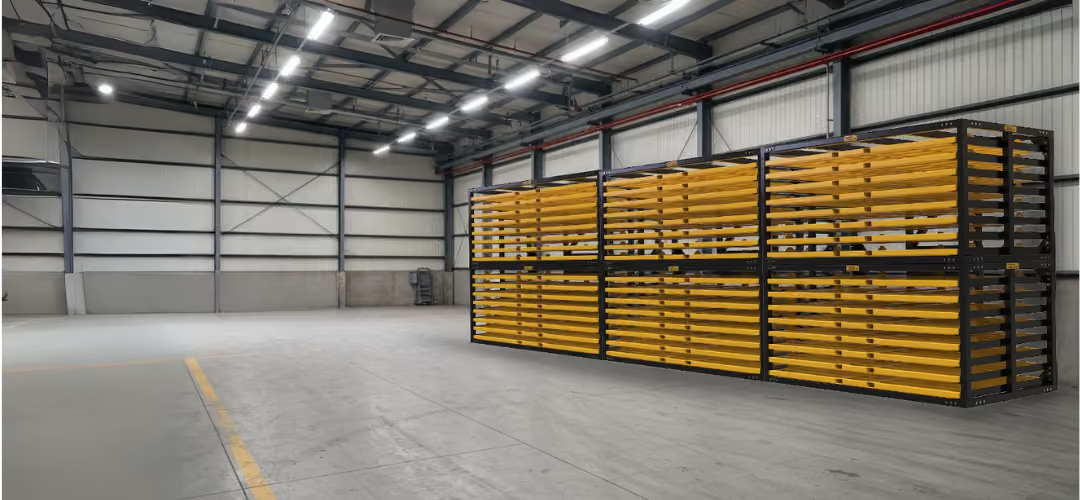
Horizontal racks store sheets flat, stacked in tiers—like a shelf system. They require significant floor footprint but offer straightforward forklift loading and are compatible with almost any shop's existing material handling equipment.
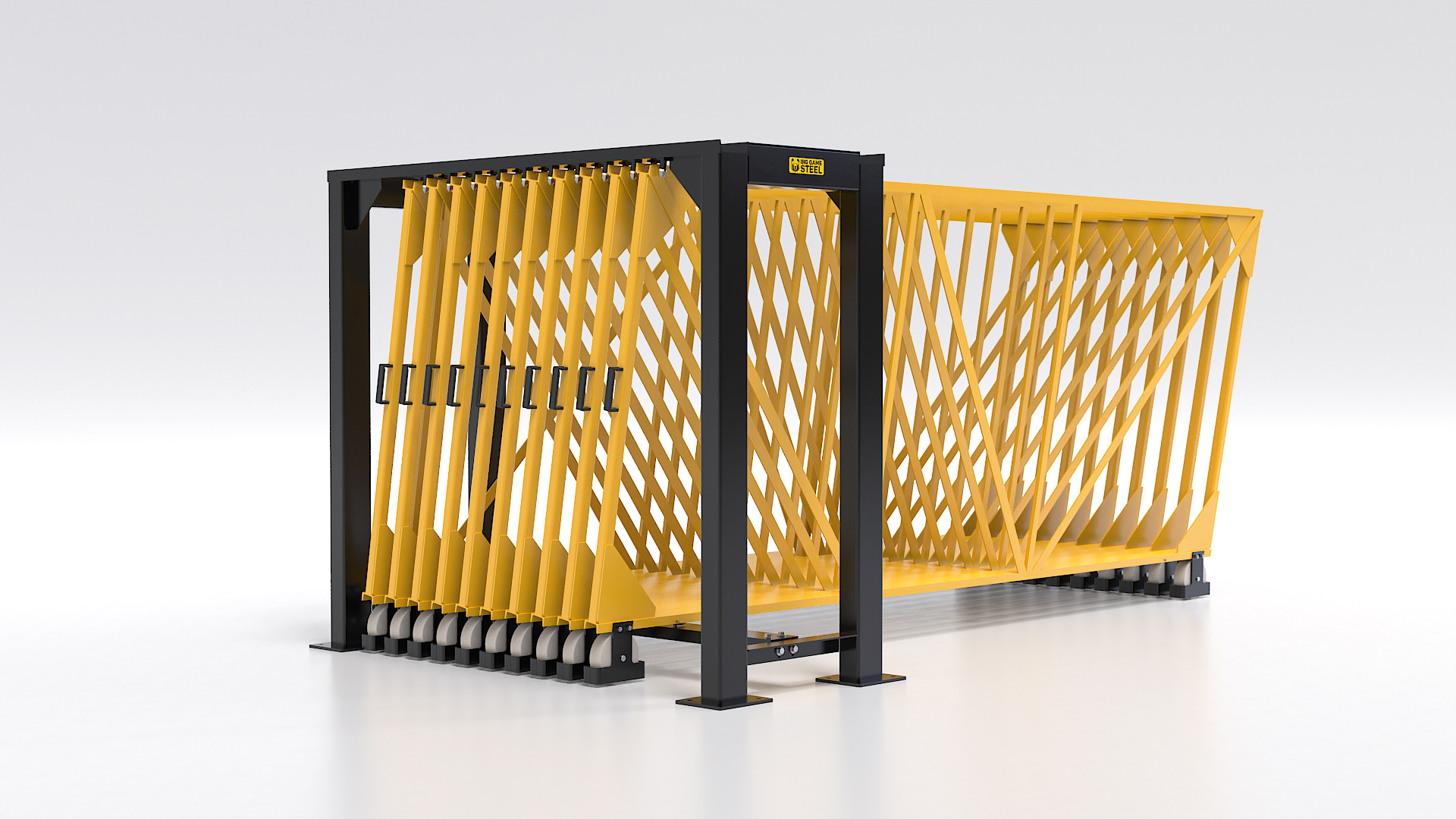
Vertical racks store sheets upright, standing on edge in individual bays. They trade floor footprint for height, pulling material up into the Invisible Square Footage most shops aren't using. Access typically requires a crane or vacuum lifter to pull single sheets cleanly.
The space math looks like this: a horizontal rack holding 10,000 lbs of sheet stock might occupy 80–100 square feet of floor. A vertical system holding the same volume could occupy 30–40 square feet—with the rest of that material going straight up.
Horizontal sheet metal storage racks are the right call in several common shop scenarios:
Big Game Steel's Standard Sheet Metal Storage Rack and Combo Sheet Metal Storage Rack are purpose-built for horizontal storage, with 5,000 lb capacity per shelf and compatibility with 4x8, 5x10, and 6x12 sheet sizes. The Combo adds crane and drawer access for shops that need more retrieval flexibility without switching systems entirely.
Vertical sheet metal storage racks earn their place when floor space is the constraint and overhead equipment is available:
The Ridgeline Vertical Sheet Metal Rack is built specifically for this application—storing sheets upright with 2,000 lb capacity per bay, designed for crane or vacuum lifter access. It's the right solution when your shop has the overhead equipment to support it and the need to reclaim floor space is real.
Many shops don't fit neatly into one category. A fabrication operation running both sheet stock and long-format material—or one that loads with a forklift but retrieves individual sheets by crane—may need both systems working together.
The Combo Sheet Metal Storage Rack addresses this directly—combining forklift-compatible horizontal shelving with crane and drawer access in a single system. For shops with diverse retrieval needs, it's often the most practical answer without requiring two separate rack installations.
Run through these questions before you decide:
Yes. Vertical racks store sheets on edge, which means you need an overhead crane or vacuum lifter to safely insert and retrieve individual sheets. Shops without this equipment are better served by horizontal racking, which is fully compatible with standard forklifts.
Vertical storage wins on floor space, typically reducing the footprint of your sheet stock by 50% or more compared to horizontal racking for the same volume of material. The tradeoff is that you need adequate ceiling clearance and the right overhead handling equipment to take advantage of it.
Absolutely. The Combo Sheet Metal Storage Rack is specifically designed for shops that use both—combining forklift-compatible horizontal shelving with crane and drawer access in a single system.
Horizontal stacking creates surface-to-surface contact between sheets, which leads to scratches, edge damage, and oxidation over time—especially when sheets are dragged during retrieval. Vertical storage eliminates that contact entirely. For shops running precision laser cutting, the difference in material condition at the machine can be significant.
For most small shops with forklift access and limited ceiling height, a horizontal rack positioned close to the primary machine is the most practical layout. If you have crane access and ceiling clearance, adding a vertical rack along a perimeter wall maximizes Invisible Square Footage without disrupting the center-floor working area.
The right answer depends on your equipment, your ceiling, and how your team actually moves material day to day. Big Game Steel builds both horizontal and vertical sheet metal storage systems engineered specifically for fabrication environments—and we're happy to help you work through which configuration makes sense.
Contact us at 847-380-0860 to talk through your shop layout and find the storage solution that stops the Floor Debt and keeps your production moving.