heet metal is heavy, has sharp edges, and when it falls, it doesn't telegraph. A 4x8 sheet of 10-gauge steel weighs over 100 lbs. A 6x12 sheet of 3/16" plate is pushing 400. When that material is floor-stacked on pallets in an active fabrication shop, the conditions for a serious injury or a costly OSHA citation are already in place.
The good news: the safety risks of poor sheet steel storage are well understood, and the fixes are straightforward. Here's what OSHA looks for, what the real hazards are on the shop floor, and how purpose-built storage systems address them head-on.
OSHA's General Industry standards under 29 CFR 1910.176 establish the baseline for material storage in manufacturing environments. The key requirements relevant to sheet steel storage include:
Floor-stacked pallets of sheet metal routinely fail on multiple counts. Stacks that shift or lean aren't stable. Pallet rows that encroach on aisles create obstructions. And the retrieval process—moving pallets to reach material underneath—generates exactly the kind of struck-by and caught-between hazards that drive OSHA recordables.
Unsecured vertical sheets leaning against walls or other racks are one of the most common—and most dangerous—storage hazards in a fabrication shop. A single sheet sliding free can kill. Even horizontal pallet stacks that shift during forklift maneuvering can drop material onto operators working nearby. OSHA classifies falling objects as one of the top four causes of workplace fatalities.
The Shuffle creates repeated forklift movement in areas where operators are also working. Every time a pallet has to be moved to access material underneath it, you're introducing a powered industrial truck into close proximity with foot traffic. OSHA 29 CFR 1910.178 governs powered industrial truck safety, and congested storage areas with poor sightlines are a direct compliance risk.
Sheet metal edges are sharp by nature. In a disorganized storage environment, operators reaching into piles or between sheets to find the right gauge are exposed to laceration hazards that proper racking eliminates entirely. Organized, accessible storage means hands go to known locations, not into unseen gaps between sheets.
Floor Debt doesn't just cost production time, it creates code violations. Pallets that drift into marked aisles, material stacked near emergency exits, or storage that reduces aisle width below OSHA minimums (29 CFR 1910.36 requires exit routes to be adequate for the number of employees) are all citable conditions that a compliance officer will flag on a walkaround.
When material isn't organized and accessible, operators compensate with awkward lifts, reaches, and carries. Musculoskeletal disorders are the most common category of workplace injury in manufacturing. A storage system that puts the right sheet at an accessible height and orientation eliminates the conditions that drive those injuries.
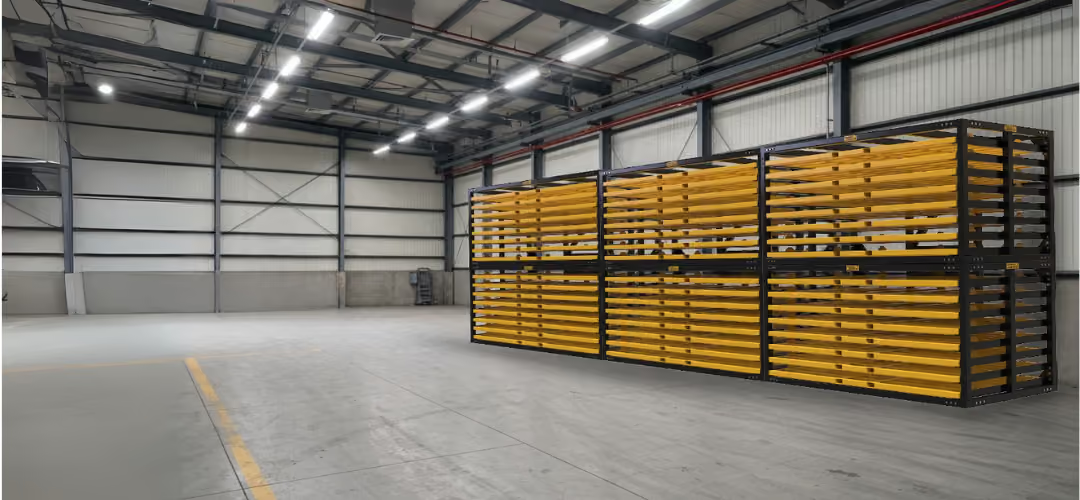
Purpose-built sheet steel storage racks address each of these hazards directly:
Big Game Steel builds racks specifically for the demands of metal fabrication environments. Every system is engineered to keep material organized, accessible, and stable:
The primary standard is 29 CFR 1910.176, which covers material storage in general industry. It requires materials to be stored in a stable, secure manner that prevents collapse or tipping, and that aisles and egress routes remain clear. Forklift operations in storage areas are also governed by 29 CFR 1910.178.
Not automatically, but they create conditions that are frequently cited: unstable stacks, aisle encroachment, and inadequate egress clearance. When pallets shift, lean, or extend into marked aisles during normal operations, those are citable conditions under 1910.176. The risk increases significantly in active shops where forklifts and pedestrians share space.
The most common are: unsecured vertical sheets leaning against walls or other racks, horizontal pallet stacks that shift during forklift maneuvering, and sheets dislodged during retrieval when material has to be moved to access what's underneath. Any of these can result in a struck-by injury from material weighing hundreds of pounds.
A purpose-built rack eliminates the root causes of the most common violations: material is secured in designated positions (no tip-over risk), retrieval doesn't require forklift repositioning (reduced powered vehicle hazards), and organized bays clear floor space that restores aisle width and egress compliance.
OSHA doesn't mandate specific rack certifications for sheet metal storage, but it does require that storage systems be adequate for the load and stable under normal operating conditions. Commercially manufactured racks with documented weight capacities satisfy this requirement. Custom or field-fabricated solutions without rated capacities create compliance ambiguity that a purpose-built system avoids.
An OSHA citation is the expensive way to find out your storage setup has a problem. The better path is a storage system that eliminates the hazards before an inspector or an injury brings them to your attention.
Big Game Steel builds heavy-duty sheet steel storage systems engineered for fabrication environments where safety and production efficiency are the same priority. Contact us or call 847-380-0860 to talk through the right solution for your shop.