ot every fabrication shop runs thin-gauge sheet stock. Plenty of operations work with 3/16", 1/4", or heavier plate steel, and the storage requirements are meaningfully different. A system sized for 16-gauge cold rolled will buckle, tip, or fail entirely under the loads that heavy plate generates.
Choosing the right sheet metal racking system for heavy materials comes down to three things: rated capacity that matches your actual loads, structural engineering that handles concentrated weight without deflection, and a configuration that works with how your shop moves material. Get all three right and the system pays for itself. Get one wrong and you have a safety and productivity problem.
Sheet metal weight scales fast with gauge and sheet size. A single 4x8 sheet of 10-gauge steel weighs roughly 105 lbs. A 6x12 sheet of 3/16" plate pushes 390 lbs. A full bundle of either, stacked 10 to 20 sheets deep, hits thousands of pounds before you add the pallet.
For a racking system, this means:
Every rack has a rated capacity. What matters is whether that rating applies to your specific loading pattern and sheet size.
A shelf rated for 5,000 lbs assumes the load is distributed across the shelf's full surface. If you're storing large-format sheets (5x10 or 6x12) that span across support points, the bending forces are different than a fully supported load. The shelf needs to be engineered for the span, not just the total weight.
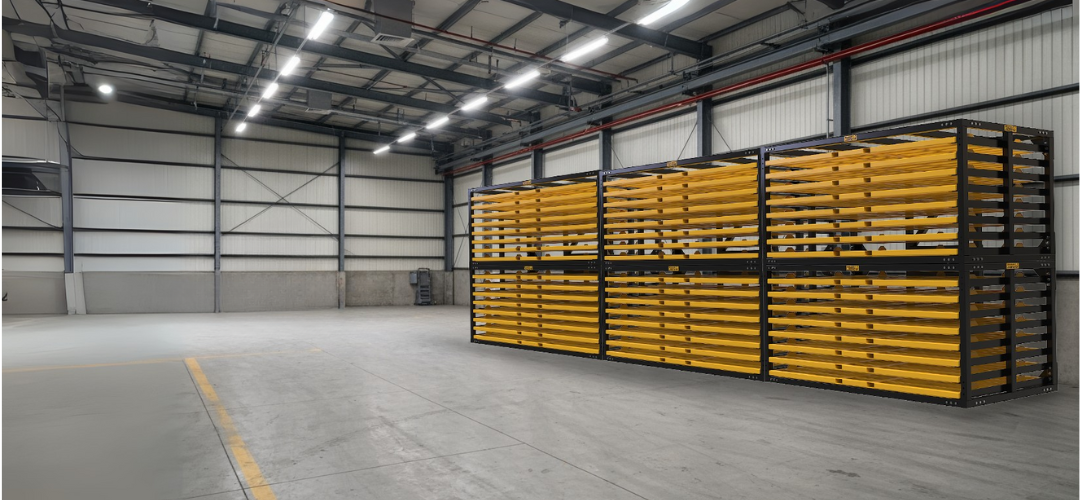
Big Game Steel's Standard and Combo racks are built with 5,000 lb capacity per shelf and accommodate 4x8, 5x10, and 6x12 sheet sizes. That capacity is engineered for the actual sheet spans involved, not just a theoretical distributed load. For shops handling 3/16" and 1/4" plate regularly, this is the baseline to work from.
For heavy plate, loading method is the first filter to apply when evaluating a racking system. The right rack for a forklift shop is different from the right rack for a crane-equipped operation.
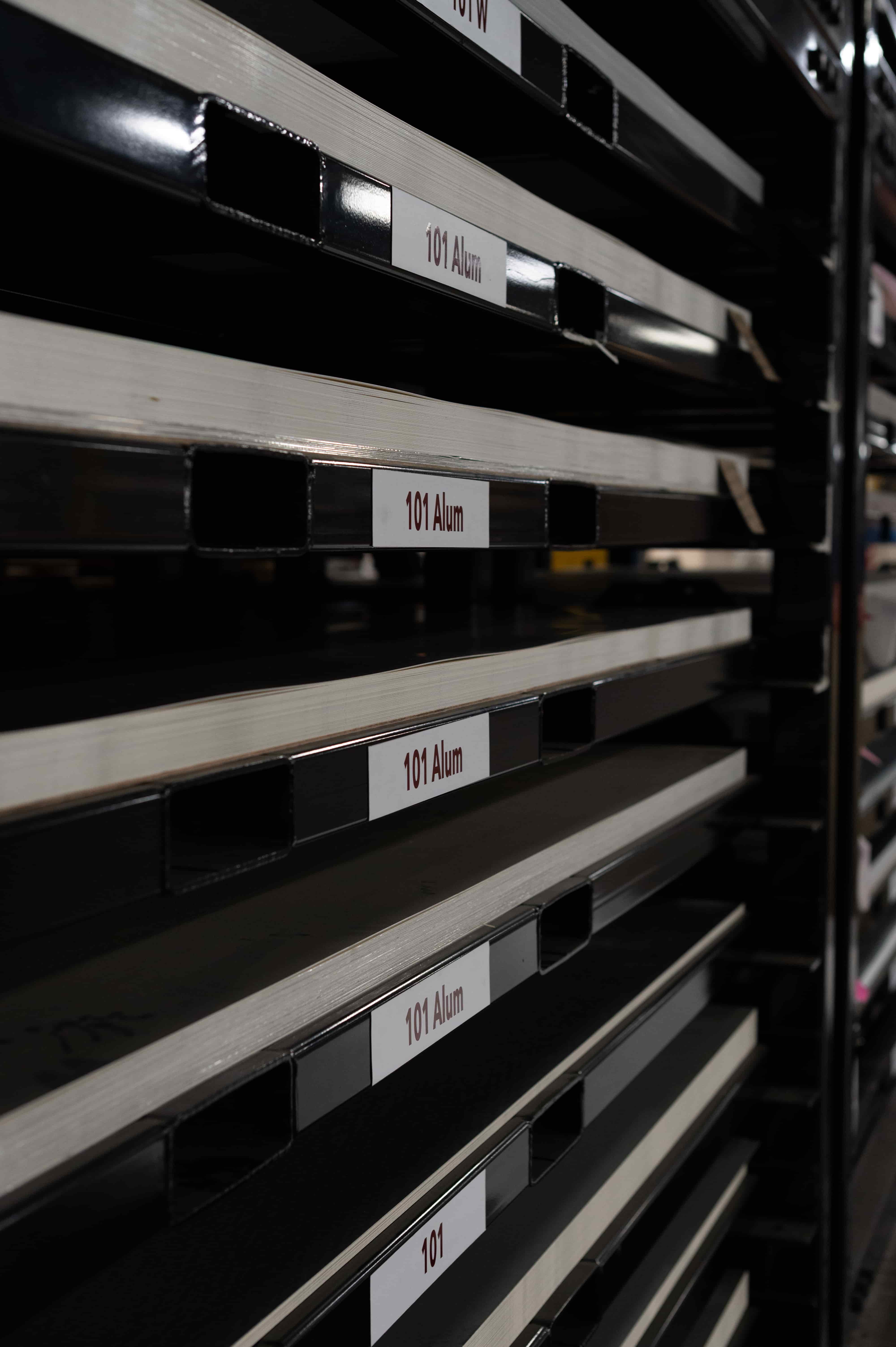
The Standard Sheet Metal Storage Rack is purpose-built for forklift loading. It accepts full bundles of sheet stock at 5,000 lbs per shelf and handles the forklift approach angles and load placement that heavy plate requires. For shops that also need crane or drawer access alongside forklift loading, the Combo Sheet Metal Storage Rack provides all three access methods in one system without sacrificing capacity.
For heavy plate operations using overhead cranes or vacuum lifters, the Roll-Out Sheet Metal Rack delivers 100% drawer extension at 5,000 lb capacity per drawer. Full extension means your crane or vacuum lifter can access any sheet in the drawer without repositioning the rack or reaching over adjacent material. For heavy plate where each sheet weighs hundreds of pounds, this is the difference between a safe retrieval and a dangerous one.
Shops handling structural tube, pipe, or long bar stock alongside sheet plate need a different solution. The Outrigger Tube Storage System uses crank-out arms at 4,200 to 6,600 lb capacity per arm and is designed for overhead crane access. It handles the long, heavy stock that no sheet rack is designed for, letting you organize tube and plate in the same storage zone without mixing systems.
Beyond rated capacity, a few structural factors separate purpose-built heavy plate racks from systems that are undersized for the job.
Most fabrication shops don't run a single gauge. They run a range, and that range determines how the storage system should be organized.
For shops regularly handling 10-gauge through 1/4" plate, a minimum of 5,000 lbs per shelf is the practical baseline. More important than the raw number is whether that rating applies to your actual sheet sizes. A rack rated for 5,000 lbs on 4x8 sheets behaves differently under a full bundle of 6x12 plate. Confirm the capacity spec covers your largest sheet size.
Purpose-built industrial steel racks rated at 5,000 lbs per shelf handle heavy plate reliably. Generic shelving, pallet rack, or light-duty storage systems are not rated for the load concentrations that heavy plate creates. The key is using a system designed and rated specifically for sheet metal storage at industrial capacities.
Big Game Steel's Standard and Combo sheet metal storage racks are rated at 5,000 lbs per shelf and accommodate 4x8, 5x10, and 6x12 sheet sizes. The Outrigger Tube Storage System handles long stock and structural tube at 4,200 to 6,600 lbs per arm. Capacity specs are designed for the actual load patterns of metal fabrication environments, not generic warehouse use.
Industrial sheet metal racks loaded with heavy plate impose significant concentrated loads on the floor beneath them. Concrete floors in good condition typically support these loads without modification, but the rack should be anchored to the floor per manufacturer specifications. Deteriorated concrete, expansion joints, or floors near loading dock areas may require evaluation before installation.
Standard pallet racking is designed for palletized loads with forklift access from the front. Sheet metal racking is engineered specifically for flat stock, with shelf geometry that supports sheets across their full width, access configurations for crane or vacuum lifter loading, and capacity ratings that account for the concentrated loads of dense metal plate. Using pallet racking for heavy sheet metal creates deflection, access, and safety problems that purpose-built systems avoid.
Heavy plate storage isn't a place to cut corners on capacity or construction. The right system handles your actual loads, works with your loading equipment, and organizes material so your team can move it safely and efficiently every shift.
Big Game Steel builds heavy-duty sheet metal racking systems engineered for the demands of production fabrication. Contact us or call 847-380-0860 to talk through the right configuration for your material mix and load requirements.